June 19, 2026 · 6 min read
Why Doing 75 Hard with Friends Changes Everything (And How to Actually Pull It Off)

TL;DR
- 75 Hard is Andy Frisella's 75-day mental toughness challenge: two 45-minute workouts (one outdoors), a strict diet, 1 gallon of water, 10 pages of non-fiction, and a daily progress photo. Miss one task — restart from Day 1.
- Doing it solo has a ~10% completion rate. Doing it with at least one accountability partner roughly triples finish odds, based on community polls and habit-formation research.
- The hard part isn't the workouts — it's Day 30, Day 50, the rainy Tuesday at 9pm when you still owe yourself an outdoor walk. Friends are what get you out the door.
- This guide covers how to start a group, the rules that prevent group collapse, and how 75 Forge's community + shared tracking makes it work without endless group-chat chaos.
What Is 75 Hard, Quickly
75 Hard is a mental toughness program created by entrepreneur Andy Frisella in 2019. It's not a fitness plan — it's a discipline framework. The rules are simple, but uncompromising:
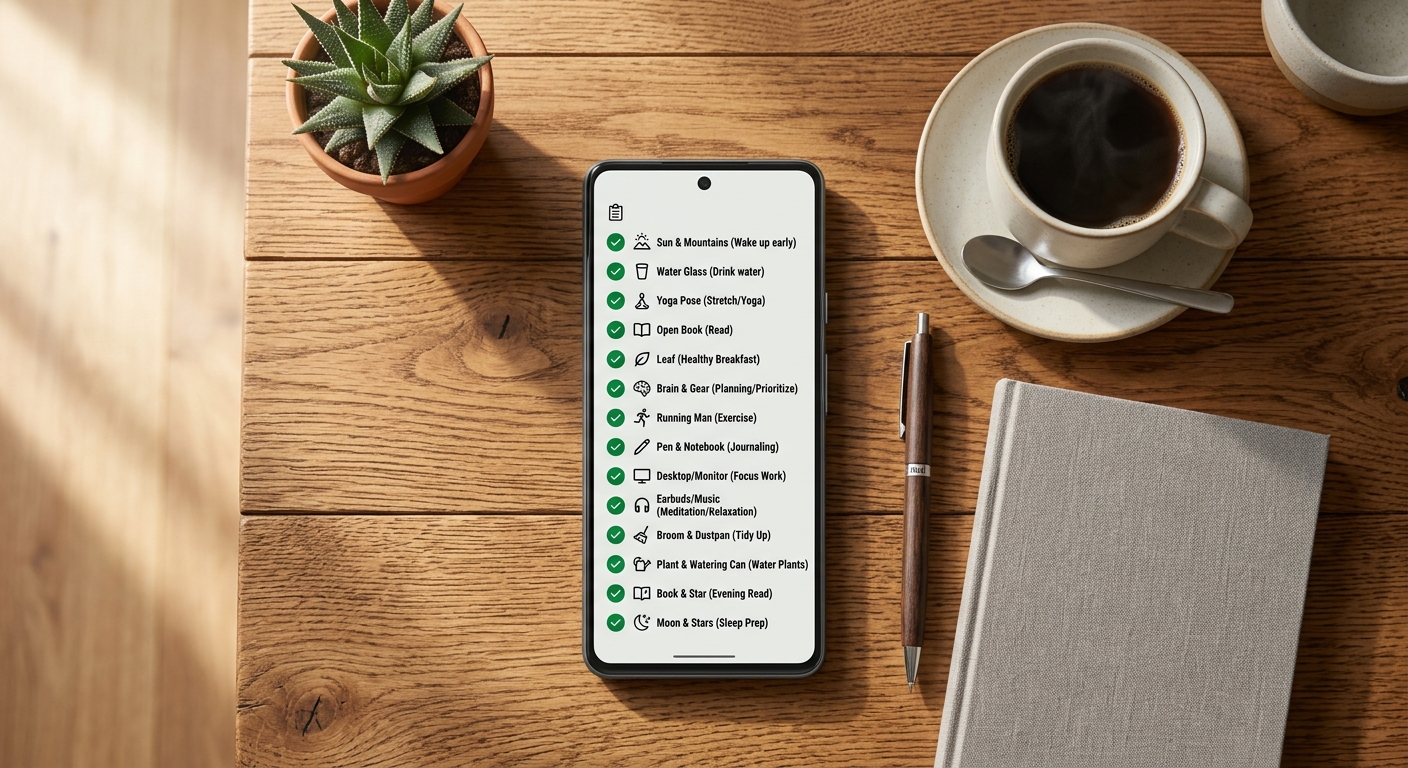
- Follow a diet (any diet — your choice — but no cheat meals, no alcohol)
- Two 45-minute workouts daily — one must be outdoors, regardless of weather
- Drink 1 gallon (3.8L) of water
- Read 10 pages of a non-fiction book (audiobooks don't count)
- Take a daily progress photo
Miss any task, on any day, for any reason — you start over at Day 1. That last rule is why most people fail. It's also why the people who finish are different humans afterward.
Why Solo 75 Hard Has a Brutal Failure Rate
Andy himself has said publicly that fewer than 1 in 10 starters complete the full 75 days. Reddit's r/75HARD echoes this — most active posters quietly disappear by week 4.
The reason isn't physical. It's the compounding decision fatigue:
- Day 1–7: motivation carries you
- Day 8–21: routine starts forming, but novelty fades
- Day 22–50: the danger zone — you're tired, life gets in the way, and the social cost of "no I can't grab a beer" mounts
- Day 51–75: you're so deep in that quitting feels worse than finishing
Almost every restart happens in that middle stretch. And it's almost never the workout — it's the outdoor walk you skipped because it was raining, or the glass of wine at a wedding you couldn't say no to.
Why Doing It With Friends Works
1. Public commitment beats private resolve
A 2009 study from Dominican University on goal-setting found people who shared their goals weekly with a friend completed 76% of them vs. 35% for those who kept goals private. The mechanism: you're not just letting yourself down anymore.
2. Shared misery is sustainable misery
When you both have to walk in the rain on Day 34, it stops being a punishment and becomes a story. Group chats during 75 Hard turn into a running comedy of "I cannot believe we're doing this." That emotional bond is what carries you through the dip.
3. Coordination forces structure
If you're meeting Sarah at 6 AM for the outdoor workout, you can't skip it. Scheduling with another human is a thousand times stickier than scheduling with yourself.

The 4 Rules That Prevent Group Collapse
Most friend-groups doing 75 Hard implode by Day 20. Here's what separates the groups that finish from the groups that don't:
Rule 1: No "we restart together" pact
This sounds nice. It's actually poison. If one person misses Day 28, the whole group restarts and resentment builds instantly. Everyone tracks their own day count. You support each other regardless of where anyone is.
Rule 2: Daily check-ins, not daily debate
A single message: "Done ✅" or "Workout 1 done, walking now." That's it. Groups that turn into 50-message-a-day discussions burn out fast.
Rule 3: One designated rules-keeper
Someone in the group needs to be the person who says "no, that doesn't count as 45 minutes." Without it, the rules erode silently over weeks and the challenge becomes meaningless.
Rule 4: Plan for the 4 hardest days in advance
Birthdays, weddings, work travel, holidays — sit down on Day 1 and look at the next 75 days on a calendar. Decide now how you'll handle each one. The failures happen on days you didn't plan for.

How 75 Forge Makes This Easier
We built 75 Forge specifically around the problem above: solo accountability is fragile, but group chats get noisy. Here's what helps:
- Community Chat — built into the app, so your challenge accountability lives separately from your iMessage group where you also send memes. Less noise, more signal.
- Daily Task Checklist — your friends can see your check-ins without anyone having to type "done" every day.
- Photo Progress — private to you by default, shareable when you hit milestones. The Day 1 vs Day 75 side-by-side is the most motivating thing you'll see at Day 40.
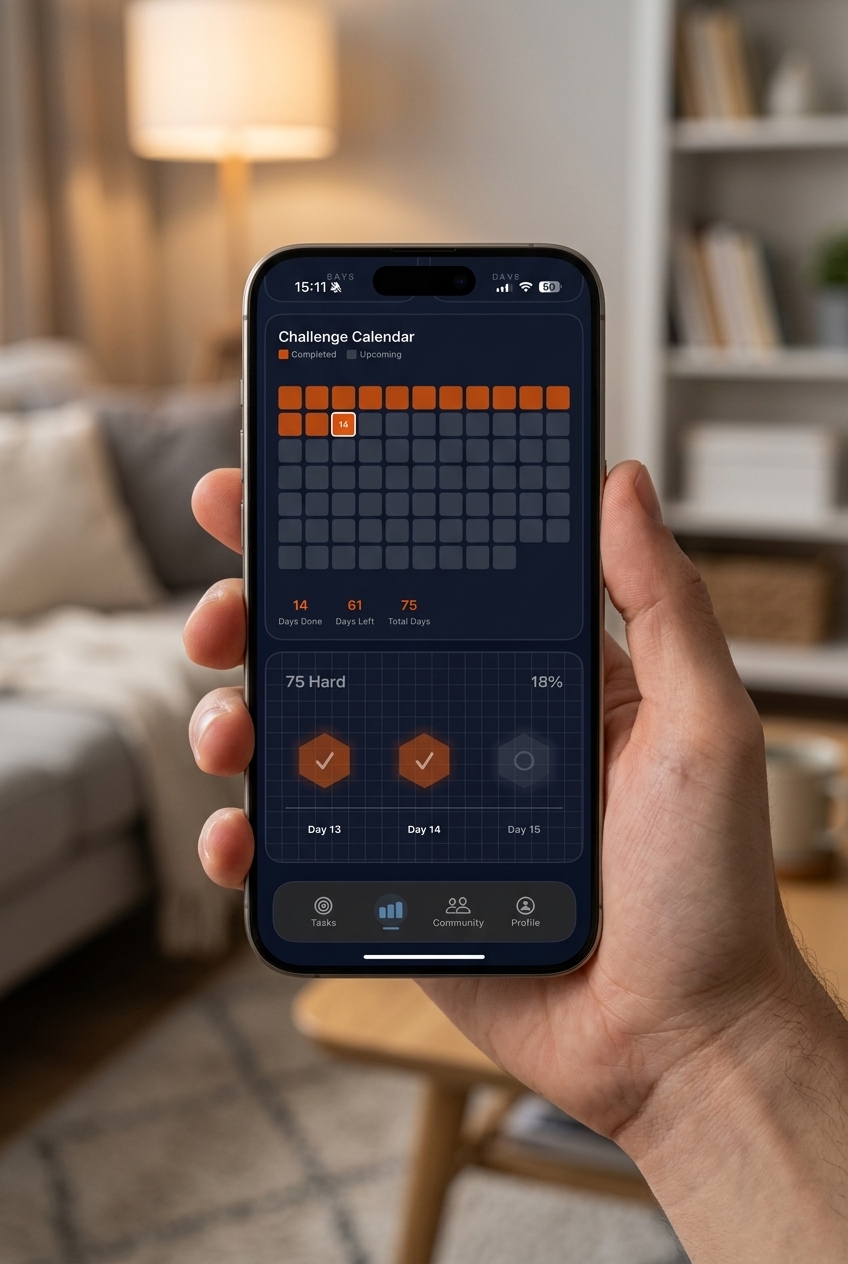
- Grid Tracker — a visual grid of your full 75 days. Seeing 30 green squares makes restarting feel infinitely worse than just doing the workout.
- Smart Reminders — separate notifications for workouts, reading, water. The reason people miss tasks isn't unwillingness — it's forgetting at 10pm that they still owe themselves 10 pages.
- Custom Challenges — if your group wants to do 75 Medium or build a modified version (e.g. swap the second workout for yoga), you can build it once and everyone in your group can use it.
75 Forge is a free download on iOS (iOS 16+), with no ads and no tracking.
How to Start a 75 Hard Group This Week
- Pick your people (2–4 max) — bigger groups dilute accountability. Best results: 2 or 3 close friends.
- Set a Day 1 together — pick a Monday 7+ days out so everyone can prep food, books, and gear.
- Hold a 30-minute kickoff call — agree on the rules, calendar conflicts, and check-in format.
- Download 75 Forge, create the challenge, invite your group — shared tracking means no daily "did you do it?" texts.
- Schedule your first 2 outdoor workouts together — momentum starts with shared experience, not solo grinding.
- Plan a Day 75 celebration now — book the dinner, the trip, whatever. Having a finish-line event makes the last 20 days feel like a countdown instead of a marathon.
Frequently Asked Questions
Can I do 75 Hard with a long-distance friend?
Yes — and it's actually one of the most common setups. You won't work out together, but you'll check in daily and share photo progress. The accountability is just as strong.
What if my friend quits halfway through?
Keep going. This is exactly why the "no restart pact" rule matters. Their day count is theirs; yours is yours. Most groups have at least one dropout — that's normal, not catastrophic.
Is it okay to do 75 Soft as a group instead?
Absolutely. 75 Soft is more sustainable for groups that include people new to fitness or with demanding life schedules. You can also mix — one person does 75 Hard, another does 75 Soft, and you still check in together.
What's the best app for tracking 75 Hard with a group?
75 Forge — built specifically for this. Free download on iOS, includes shared tracking, community chat, daily checklist, water log, photo progress, and a visual grid. No ads, no tracking, no account needed.
How long should we wait before starting?
At least 7 days of prep. You need books bought, meals planned, workout schedule mapped, and the calendar conflicts identified. Starting unprepared is the #1 reason for early restarts.
The Real Reason People Finish
The 75 Hard finishers I've talked to never say "I had incredible willpower." They say "I had Jake." Or "I had my sister." Or "I had a group chat that didn't let me quit."
The challenge is solo by design — but the people who finish almost never do it alone.